Plastics & environment
Plastic recycling – good or useless for the environment?
The RecyPac association was founded in Zurich on November 30, 2023. Stakeholders along the entire value chain have joined forces to establish a national, harmonized system for the collection and recycling of plastic packaging and beverage cartons in Switzerland. Not all environmental organizations support recycling. How useful is plastic recycling really?
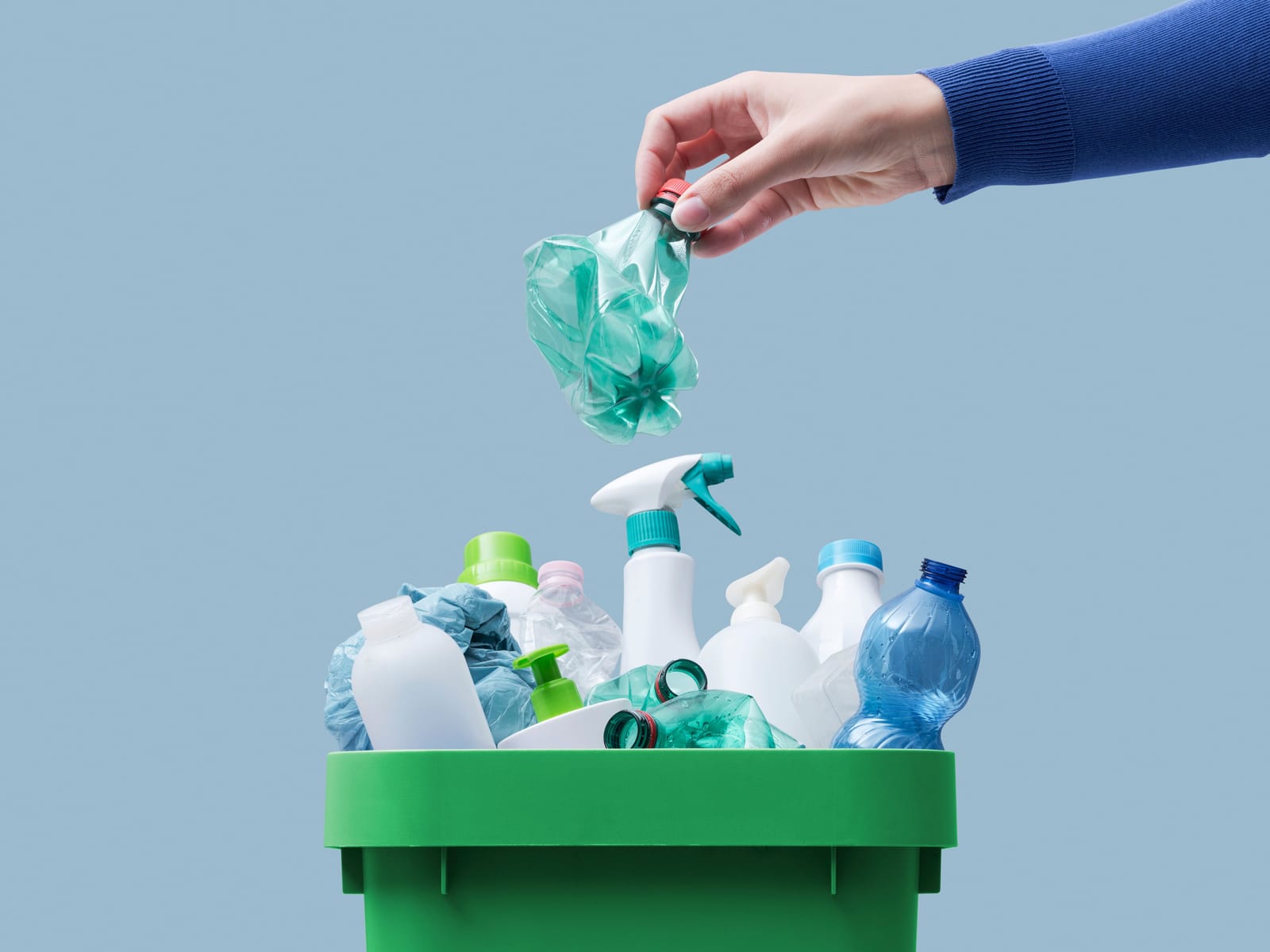
Is plastics recycling worth it environmentally?
Yes – the balance is positive, but smaller than often hoped. At a realistic recycling rate of 31 percent, the footprint of the Swiss plastics system falls by roughly 1.4 million tonnes of CO₂ equivalent per year. Recycling does not replace avoidance; it complements it.
Status note. This article was written in December 2023, when the RecyPac association was founded. The national collection scheme for plastic packaging and beverage cartons has been rolling out since January 2025; the rates and balances quoted here reflect the 2023 situation.
What are the benefits of recycling for the climate?
The average CO₂ footprint of plastics over the entire life cycle without recycling is 4.9 kg CO₂ eq. per kg of material. This figure is even likely to be on the rise, as more and more coal-fired power plants are being used in the countries where the raw materials are produced.[1]
In Switzerland, the plastic system generates 5.4 million metric tons of CO₂ eq., which corresponds to 4.7% of the total Swiss CO₂ footprint. With a recycling rate of 31% (packaging 63%) – which is considered realistic for all products in the medium term – this figure would fall to 4.0 million metric tons, i.e., by 1.4 million metric tons.[1]
The old story of the entrecôte
What does the above reduction mean for a single person in Switzerland? Is the environmental benefit as low as described below?
«If a person in Switzerland collects 70 percent of their plastic waste separately for a year, the environmental benefit is equivalent to not eating a beef entrecôte»[2]
Let’s check this statement:
The savings from not eating a steak
Beim Rindfleisch entstehen insgesamt 13.3 kg CO₂ eq. pro kg Fleisch.[3]
Beef produces a total of 13.3 kg CO₂ eq. per kg of meat.3
If we continue to assume a weight of 250 g for the entrecôte, 3.33 kg of CO₂ emissions can be saved by dispensing with one portion.
.


The savings from recycling 70% of a person’s plastic waste
Let us first calculate the CO₂ eq. Savings if all plastic waste is recycled:
| Basicdata | Value | Unit |
|---|---|---|
| Municipal waste (plastic packaging)[4] | 225,000 | metric tons |
| Number of residents in Switzerland[5] | 8,865,270 | people |
| Percentage of municipal waste plastic per capita and year (A) | 25.38 | kilogram |
| Emission factors linear system | Value | Unit |
|---|---|---|
| Emission factor raw material processing disposal (linear)[1] (B) | 4.9 | |
| Total CO₂ eq. Emissions per person and year [(A)x(B)] | 124.36 | Kilogramm |
| Emission factors circular recycling system | Value | Unit |
|---|---|---|
| Emission factor recycling[6] | 0.5600 | |
| Emission factor reprocessing[7] | 0.9475 | |
| *Emission factor recyclate processing recycling (circular) * (C) | 1.5075 |
| Savings circular vs. linear system | Value | Unit |
|---|---|---|
| Net savings emission factor for recycling [(B)-(C)] = (D) | 3.3925 | |
| CO₂ eq. Savings per capita and year [(A)x(D)] | 86.10 | Kilogramm |
If 70% of this is saved through recycling, this results in 60.3 kg CO₂ eq. less CO₂ eq.. That’s almost twenty times more savings than by not eating a steak.
Or, to put it another way: The entrecôte would have to weigh 4.5 kg! That’s quite a lot.
The annual consumption of beef in Switzerland in 2022 was 13.15 kg per capita.[8]
This means that the savings from 70% recycling correspond to a third of the annual beef consumption of a person in Switzerland, and not a single entrecôte.
Recycling is recognized as part of the solution
A study examining the effects of the plastic system on planetary boundary systems comes to the conclusion:
«Increasing recycling rates tackles all pillars of the triple planetary crisis addressed by the United Nations Einvironment Programme agreement.» und: «Recycling is the key towards environmentally sustainable plastics as it keeps virgin production to a minimum.»[9]
New regulations such as the Packaging and Packaging Waste Directive or the End-of-Life Vehicles Regulation stipulate recycling quotas and the use of recyclates.
Recycling will be even better in the future
A study by the Stockholm-based environmental consultants Material Economics shows scenarios in which the emission factor for recycled plastic falls to 0.1 kg CO₂ eq. per 1 kg of material over its entire service life if the system is optimally designed (decarbonized energy system) [10]:
| Production route | t CO₂ per t of plastic |
|---|---|
| Primary plastics, 2017 | 5.1 |
| Primary plastics, 2050 | 4.8 |
| Primary plastics with renewable energy | 3.7 |
| Mechanical recycling, low quality, 2017 | 1.4 |
| Mechanical recycling, high quality, 2050 | 0.1 |
| Chemical recycling | 1.0 |
Even Extinction Rebellion sees recycling as part of the solution
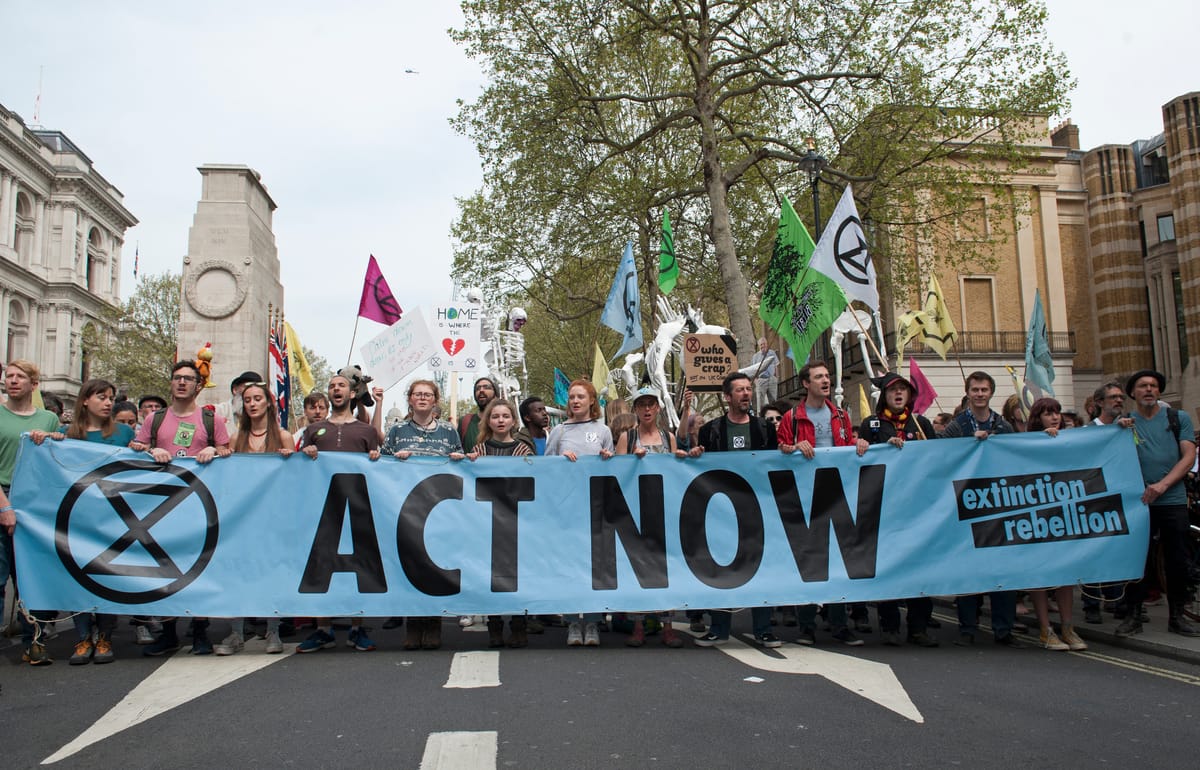
Extinction Rebellion is an organization whose activists are fighting the climate crisis with actions including civil disobedience to raise awareness of this urgent environmental issue.
Extinction Rebellion writes on its website:
«Good news! Science has been working on solutions for several decades: There is already a plan on the table for every question and every problem. We only show a few examples here, the whole toolbox is much bigger! The real task is to implement the solutions in good time»[11]
And it refers to Project Drawdown on its website. This lists potential savings in greenhouse gas emissions for all sectors.
Overall – across all products and sectors – corresponding measures could save 1637.26 gigatons of CO₂ eq. in the period 2020-2050. [12]
In the area of plastics, recycling is also mentioned as a solution approach, which could avoid 1.69 gigatons of CO₂ eq. in the same period. [12]
For the sake of completeness, it should be mentioned that the drastic reduction in plastic consumption is also cited as a necessary measure and has an even greater impact on the climate than recycling.[12]
So a free ride for disposable products?
Mehrwegprodukte sind in vielen Fällen ökologischer als Einwegprodukte. Hier sollte eine Umstellung erfolgen. Die Grundlage dafür muss ein wissenschaftlich belastbares Life Cycle Assessment sein.
Eine generelle Ablehnung von Einweg zu Gunsten von Mehrweg, wie dies einige NGOs fordern, kann zu höheren Umweltbelastungen führen, wenn beispielsweise lange Transportwege und aufwendige Reinigungsverfahren notwendig sind. Letztere ergeben sich aus den Hygieneanforderungen, insbesondere bei Lebensmitteln.
Das sieht auch das europäische Parlament so und hat sich in der Plenarabstimmung vom 22. November 2023 über die neue Verpackungs- und Verpackungsabfallverordnung PPWR folgende Änderung hinsichtlich obligatorischer Reuse-Quoten entschieden:
«14a. … Economic operators shall be exempted from the obligation to meet the targets in this Article if reuse is not the option that delivers the best overall environmental outcome on the basis of such a life cycle assessment. »[13]
There are also doubts within the second instance dealing with the proposal: in the Council of the European Union, 10 Member States – including Italy, Finland, and the Czech Republic – are also in favor of a life cycle assessment approach:
«**Reusable packaging **is not always suitable nor the optimal solution for all materials and product categories. Reuse and refill targets should be considered only for products where reuse and refill are technically and practically feasible and provide a measurable environmental benefit compared to single-use alternatives.»[14]
And the Ellen MacArthur Foundation also recognizes that not all plastic applications can be solved with reusable packaging, despite the benefits of doing without and reusing, and proposes recycling as one of the recovery options:
«Innovate to ensure that the plastics we do need are reusable, recyclable, or compostable.»[15]
So what to do?
A mix of measures promises the best solution:
Reduce
The use of materials should be minimized to what is technically necessary. No unnecessary use of plastic, no over-packaging.
For non-perishable goods (such as shower gel), larger packaging formats can significantly improve the ratio of materials used to the quantity of contents and considerably reduce the amount of plastic required.
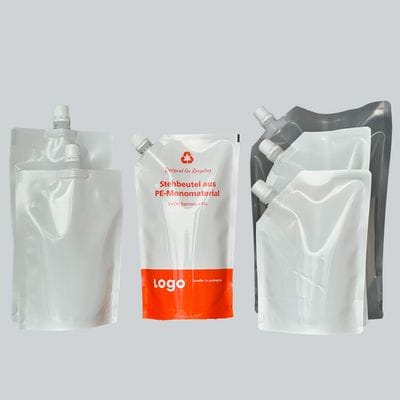
Also refill packs made of thin, flexible material. However, care must be taken to ensure that mono-material is used wherever possible so as not to jeopardize recyclability.
Reuse
For many applications, reusable solutions offer a better ecological alternative. A good example is the ReCircle system in the take-away catering sector.
Weiteres Beispiel: mit Kunststoffpaletten lassen sich wesentlich mehr Umläufe erzielen als mit Holzpaletten. Auch bei Transportverpackungen halten Kunststoffkisten lange und bieten eine gute Alternative zu Einweg-Kartonnagen. Die Post macht sich dies auch zu Nutze mit den gelben Dispoboxen.[16]
Wie bereits beschrieben sollte ein belastbares LCA Daten und Ergebnisse liefern, aufgrund derer entschieden werden kann, ob die Mehrwegalternative ökologische Vorteile bietet, was in vielen Fällen so ist.

Recycle
Where disposable solutions perform best ecologically, the material should be kept in the cycle.
There are various procedures for this:
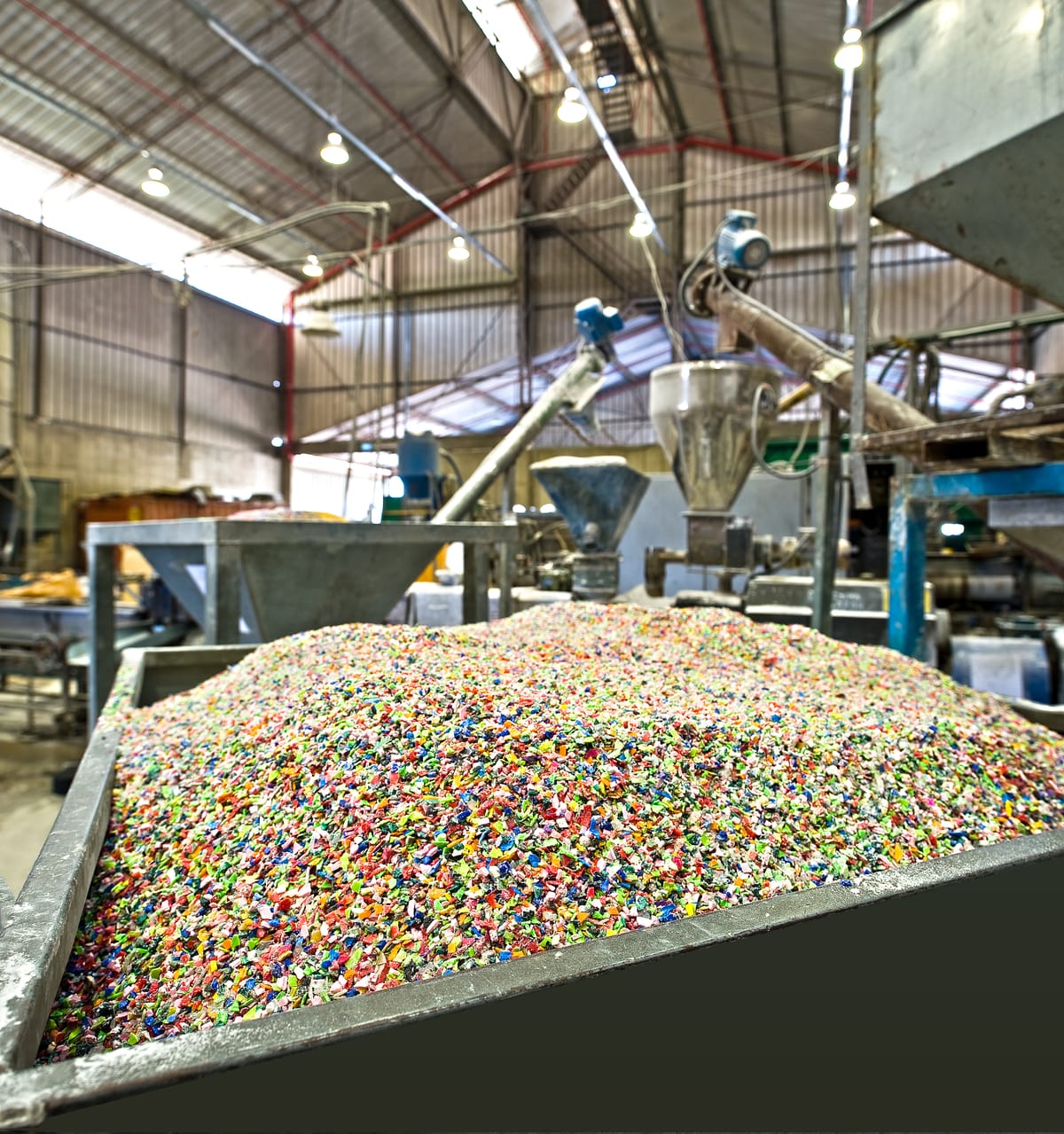
- Mechanical recycling (sorting, shredding, washing, drying, sorting, compounding, granulating)
- Chemical recycling (recovery of monomers by pyrolysis or solvolysis)
Products should be designed in such a way that they fit optimally into recycling streams and produce a high yield.
Or even do without plastic completely?
If this makes ecological sense and is economically viable for consumers, a change of material should be made. Again, a solid, LCA-based assessment must be made as to whether substitution with another material would be better. And plastics have a good chance here, as they have the best material efficiency:[17]
| Packaging material | Material per kg of packaged product |
|---|---|
| Glass | 572 g |
| Paper, carton and cardboard | 51 g |
| Plastic | 24 g |
| Ferrous metals | 114 g |
| Aluminium | 45 g |
| All materials | 61 g |
| All materials excluding plastic | 116 g |
| All materials excluding plastic and glass | 57 g |
The German Nature and Biodiversity Conservation Union (NABU) also warns against a hasty switch from plastic to other materials:
«Stop misleading consumers Currently, companies are still focusing too much on reducing plastics, with new advertising slogans addressing properties such as “plastic-free”, “compostable” or “biodegradable”. NABU believes that many of the advertising claims that use these buzzwords are misleading for consumers. Biodegradable plastics cannot be recycled and do not add any value to humus during composting. For NABU, they are therefore not a good packaging alternative. Consumers must also not be deceived if disposable glass or paper are advertised per se as a more environmentally friendly packaging alternative»[18]
With this in mind, any initiative that promotes a more sustainable plastic system in the area of reusable or recycling must be supported – including the new RecyPac organization..
Sources
- [1] Klotz M. et al. (2023): Potentials and limits of mechanical plastic recycling. Department of Civil, Environmental and Geomatic Engineering, ETH Zurich, Zurich
- [2] Sackgasse Plastik-Recycling [Zugriff am 4.12.23]
- [3] Fleisch – was kostet das Stück Lebenskraft [Zugriff am 4.12.23]
- [4] Dinkel F., Bunge R (2017): KuRVe (Kunststoff Recycling und Verwertung) Ökonomisch-ökologische Analyse von Sammel- und Verwertungssystemen von Kunststoffen aus Haushalten in der Schweiz., Cabrotech/UMTEC. Zürich/Rapperswil
- [5] Bundesamt für Statistik (2023): Ständige Wohnbevölkerung am Ende des ersten Quartales 2023, Neuchâtel
- [6] Franklin Associates, A Division of Eastern Research Group (2018) :LIFE CYCLE IMPACTS FOR POSTCONSUMER RECYCLED RESINS: PET, HDPE, AND PP.). Overland Park
- [7] Ecoinvent 3.7.1 dataset documentation - injection moulding – RER
- [8] Proviande Genossenschaft (2023): Der Fleischmnarkt im Überblick, Bern
- [9] Bachmann M. et al. (2022) : Towards circular plastics withhin planetary boundaries. In : Nature Sustainability
- [10] Material Economics (2021) : The Circular Economy. A powerful force for climate mitigation, Stockholm
- [11] Extinction Rebellion: Wer wir sind [Zugriff 4.12.23]
- [12] Project Drawdown: Table of soultions [Zugriff am 4.12.23]
- [13] European Parliament : Packaging and packaging waste, Amendments adopted by the European Parliament on 22 November 2023 on the proposal for a regulation of the European Parliament and of the Council on packaging and packaging waste, amending Regulation (EU) 2019/1020 and Directive (EU)2019/904, and repealing Directive 94/62/EC (COM(2022)0677 – C9-0400/2022 –2022/0396(COD)), P9_TA(2023)0425, Amendment 418, Brussels
- [14] Non-paper of Finland, Czech Republic, Croatia, Bulgaria, Cyprus, Greece, Italy, Lithuania, Latvia and Slovenia (24.11.2023) on the proposal for a Regulation of the European Parliament and of the Council on packaging and packaging waste (PPWR), Brussels
- [15] Designing out plastic pollution [Zugriff am 4.12.23]
- [16] Dispoibox Die ökologische Mehrwegverpackung aus Kunststoff ; [Zugriff am 5.12.23]
- [17] GVM Gesellschaft für Verpackungsmarktforschung mbH (2023): Materialeffizienz von Packstoffen im Vergleich, Mainz
- [18] NABU Naturschutzbund Deutschland e.V.: Lebensmittelverpackungen im Vergleich [Zugriff am 5.12.23]