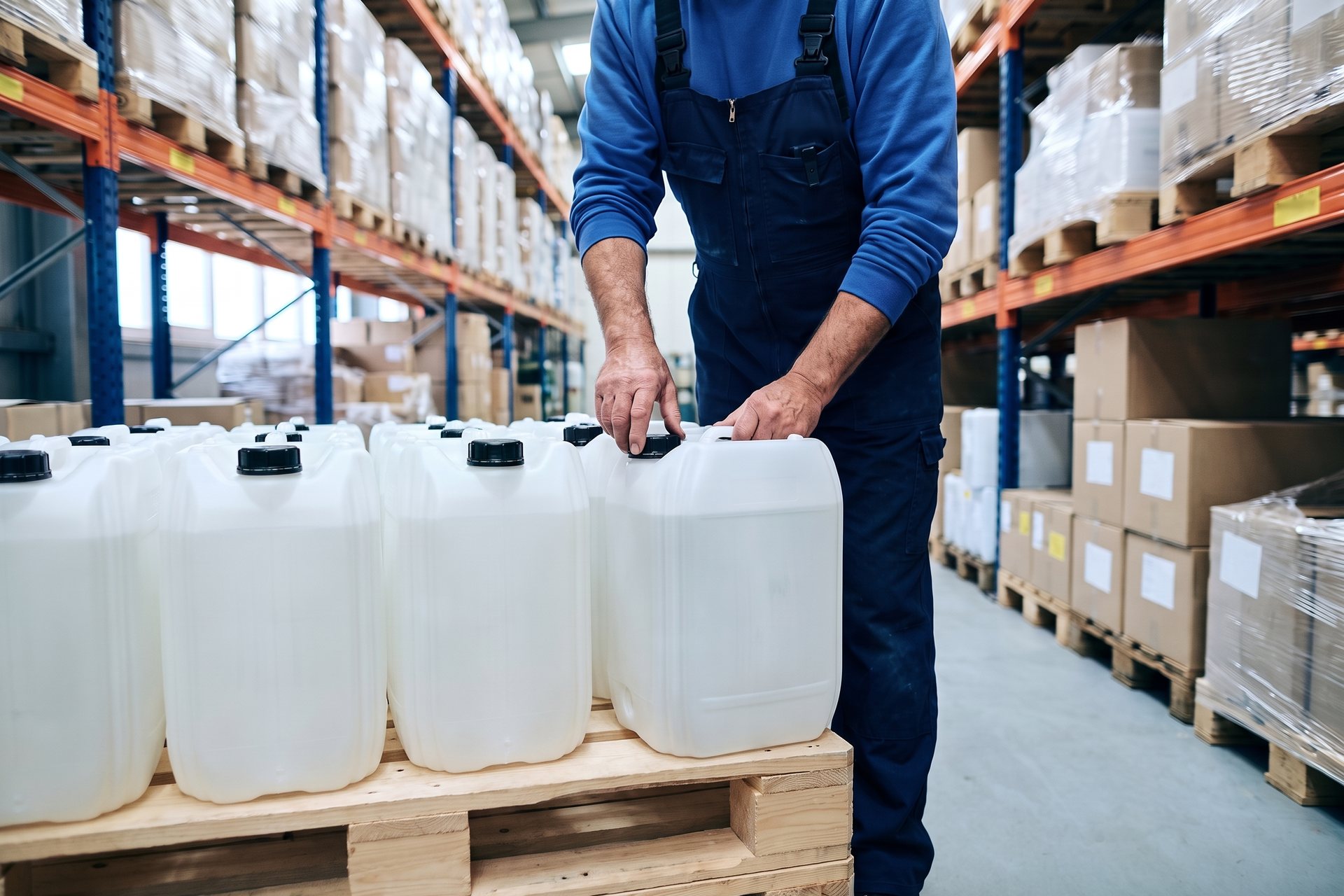
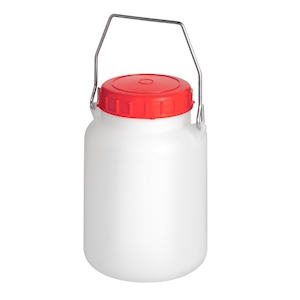
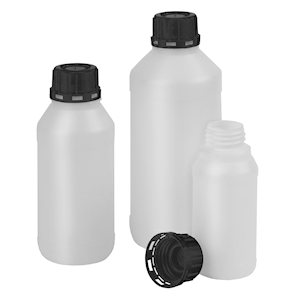
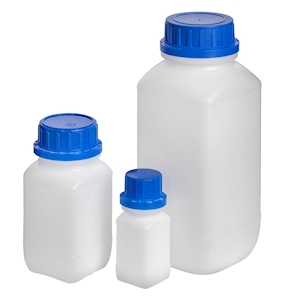
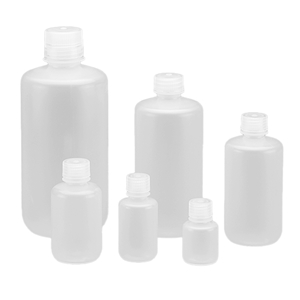
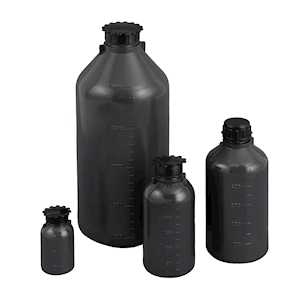
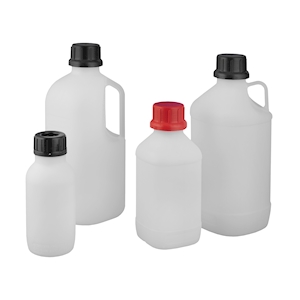
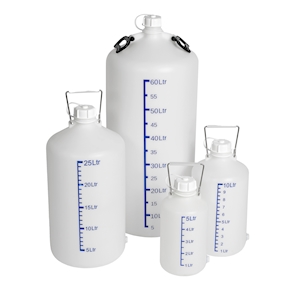
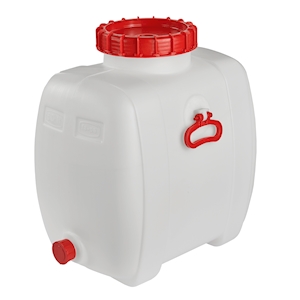
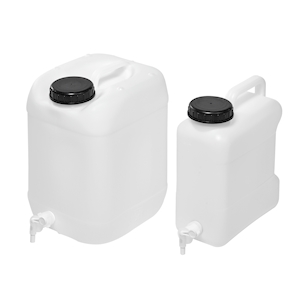
Plastic safety containers are UN type-approved vessels for storing and transporting hazardous liquids and solids. Anyone moving chemicals, acids, alkalis or flammable liquids is subject to the dangerous-goods regulations ADR (road), RID (rail) and IMDG (sea). An admissible container bears the UN mark («u» above «n» in a circle) with a design-type code (e.g. 3H1 for tight plastic canisters), packing group (X/Y/Z) and year of manufacture. Which container is permitted depends on the filling material: hazard class, packing group and the chemical resistance of the material must match. PE-HD and PP cover many applications; aggressive oxidisers or hydrofluoric acid require special materials. The choice is to be made by filling material and design type, never blanket.
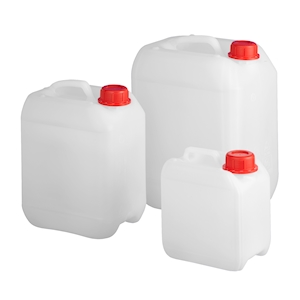
UN-tested stackable canisters in PE-HD, 2 to 30 litres, for liquid hazardous goods of groups II and III – available electrically dissipative or with a degassing closure that prevents overpressure inside the container.
Why Semadeni for Safety containers for chemicals and hazardous goods
UN type-approved
Containers with the UN mark meet ADR/RID/IMDG. The approval is design-type- and filling-material-specific, not a general material property.
Matching packing group
Coding X, Y or Z for the admissible hazard level – the right group follows from the hazard label and safety data sheet of the filling material.
Chemical resistance verifiable
PE-HD resists many alkalis and dilute acids; for hydrofluoric acid or concentrated oxidisers we recommend special materials such as PVDF – to be checked by medium.
Options for flammable media
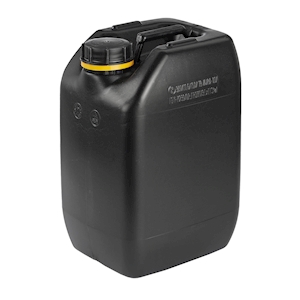
For flammable liquids of class F-A we supply electrically dissipative versions with proof of conductivity.
Conformity records
For every UN-approved container, a test report and declaration of conformity are available on request – per design type and contents.
Available from stock
Common volumes from 1 to 60 litres from stock, complemented by custom manufacturing from our own Swiss production and labelling in Ostermundigen.
CH & EUproduction across the Semadeni Industry Group
Evidence & compliance
Audited processes, documented conformity
Semadeni AG is certified to ISO 9001, ISO 14001, EN ISO 13485, ISO 22000 and ISO/TS 22002-4 and rated EcoVadis Gold (84/100). Data sheets and declarations of conformity are supplied on request, per product and application rather than as a blanket document.
Certification body QS Zürich AG · all certificates valid until 23.02.2028
A typical selection scenario: for road transport of a dilute acid of packing group II, the choice falls on an PE-HD canister coded UN 3H1/Y with a current year of manufacture. We take the hazard class and packing group from the safety data sheet and check material resistance against the actual medium. Which design type is admissible we clarify by filling material and regulation.
Plastic safety containers for dangerous-goods transport
Anyone storing or transporting chemicals, acids, alkalis or flammable liquids is subject to strict regulations. Semadeni offers UN-approved plastic containers (e.g. UN 3H1, UN 3H2) that meet the requirements of ADR (road transport), RID (rail) and IMDG (sea). Which container is admissible follows from the filling material and its dangerous-goods classification.
Which container types are there?
Canisters (UN 3H1)
Flat canisters and round containers in PE-HD in volumes from 1 to 30 litres. Suitable for liquid hazardous goods of packing groups II and III.
Wide-neck containers (UN 3H2)
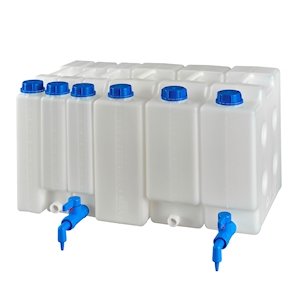
For solid and pasty hazardous goods as well as viscous liquids. Screw caps GL 63 to GL 120.
Safety bottles with venting
For chemicals that can build up pressure. A built-in valve prevents overpressure failure.
Material selection by medium
The following overview is a reference point; resistance is to be checked by medium, concentration and temperature:
Medium
Reference material
Dilute acids (e.g. HCl, dilute H₂SO₄)
PE-HD
Alkalis (e.g. NaOH)
PE-HD, PP
Solvents, alcohols
PE-HD (check by medium)
Oxidising chemicals
PVDF, possibly PE-HD (verified)
Flammable liquids cl. F-A
PE-HD, electrically dissipative
Conformity and marking
All UN-approved containers carry the UN marking with design-type code, packing group, year of manufacture and country of approval. On request, Semadeni supplies the declaration of conformity and the test report.
Note: The dangerous-goods regulations (ADR/RID, GHS/CLP) determine which packing group applies to your medium. Our specialists support the selection of the admissible design type.
Frequently asked questions about Safety containers for chemicals and hazardous goods
What does the packing group on UN containers mean?
The packing group (X, Y or Z) indicates the maximum admissible degree of hazard: X = groups I–III, Y = groups II and III, Z = group III only. The right group follows from the UN hazard label and the safety data sheet of the filling material.
Are PE-HD containers suitable for acids and alkalis?
PE-HD resists many dilute and concentrated alkalis (e.g. NaOH) as well as numerous acids (e.g. HCl, dilute H₂SO₄). For hydrofluoric acid (HF) and concentrated oxidisers we recommend PVDF or PTFE. Resistance is to be checked by medium and concentration – consult the resistance table or ask our technical team.
Which container do I need for flammable liquids?
For flammable liquids of hazard class F-A (e.g. acetone, ethanol) electrically dissipative containers that prevent static charge build-up are advisable. Semadeni supplies corresponding canisters with proof of conductivity – the specific requirements depend on the dangerous-goods classification.
How long is a UN approval valid?
The type-design test is time-limited and must be renewed periodically per ADR; the year of manufacture is given in the UN mark. A container's approval is valid for five years from its date of manufacture. Use only containers with a current approval – older batches can be expired despite a correct mark.
Does Semadeni supply conformity records for UN containers?
Yes – for every UN-approved container, test reports and declarations of conformity are available on request. Decisive is the tested design type together with the admissible contents, not a general assurance.
Unsure which dangerous-goods container is admissible for your filling material?
Tell us the filling material, hazard class, packing group and volume – we recommend the design type and material and supply the test report and declaration of conformity. Personal advice from Ostermundigen and Vienna.
The goal is a publishable base without wrong information – not completeness. Anything missing or that could go deeper: report it as "idea for later". We will keep expanding after go-live.
You go through your pages and report what is factually wrong. Expect three to five minutes per page.
Read the page like a customer, not like a proofreader – and only this page, not the ones it links to. Those are on someone else's list.
Report anything that stands out right here – a picture of the page is attached automatically. For a specific passage: select it, right-click, "Copy link to highlight", and paste the link into your report.
At the end click "Mark page as reviewed" – the button stays at the bottom of this panel. Even if you found nothing – otherwise "nothing reported" cannot be told apart from "never looked at". And also if you did report something: the tick means "looked at", not "free of errors".
If a page belongs to someone else's field: "Bring someone in" for a single spot, "Hand over page" for the whole page.
Your task list shows at any time what is yours, what is still open and what became of your reports.
Please report: Anything missing, outdated or wrong – and anything visibly broken.
Please don't report: Taste, wording polish, wishes. And that forms do not arrive: that is intentional.