Plastics & environment
How plastic packaging helps to reduce food waste
In Europe, 88 million tons of food is being thrown away because it went bad. What role plastic does plastic packaging play in this context? The Austrian organisation denkstatt GmbH – sustainable thinking – has done some research with regard to this question inn 2014.
Does plastic packaging reduce food waste?
Yes, measurably. Europe throws away 88 million tonnes of food a year. Protective packaging extends shelf life considerably; the climate burden of spoiled food usually exceeds that of the packaging several times over.
In Europe, 88 million tons of food is being thrown away because it went bad[1]. What role plastic does plastic packaging play in this context?
The Austrian organisation denkstatt GmbH – sustainable thinking – has done some research with regard to this question inn 2014.[2]
Many European cities saw the opening of shops advocating shopping without packaging and claiming to promote sustainability. If one decides to shop there, he or she has to bring an own container to carry the purchased goods home. This will be a reusable box or so. After every use, this box needs cleaning and rinsing, consuming hot water and tensides. This should be taken into account when assessing such conceptions. In addition, shelf life of food is reduced which has a negative impact on the CO2 footprint.
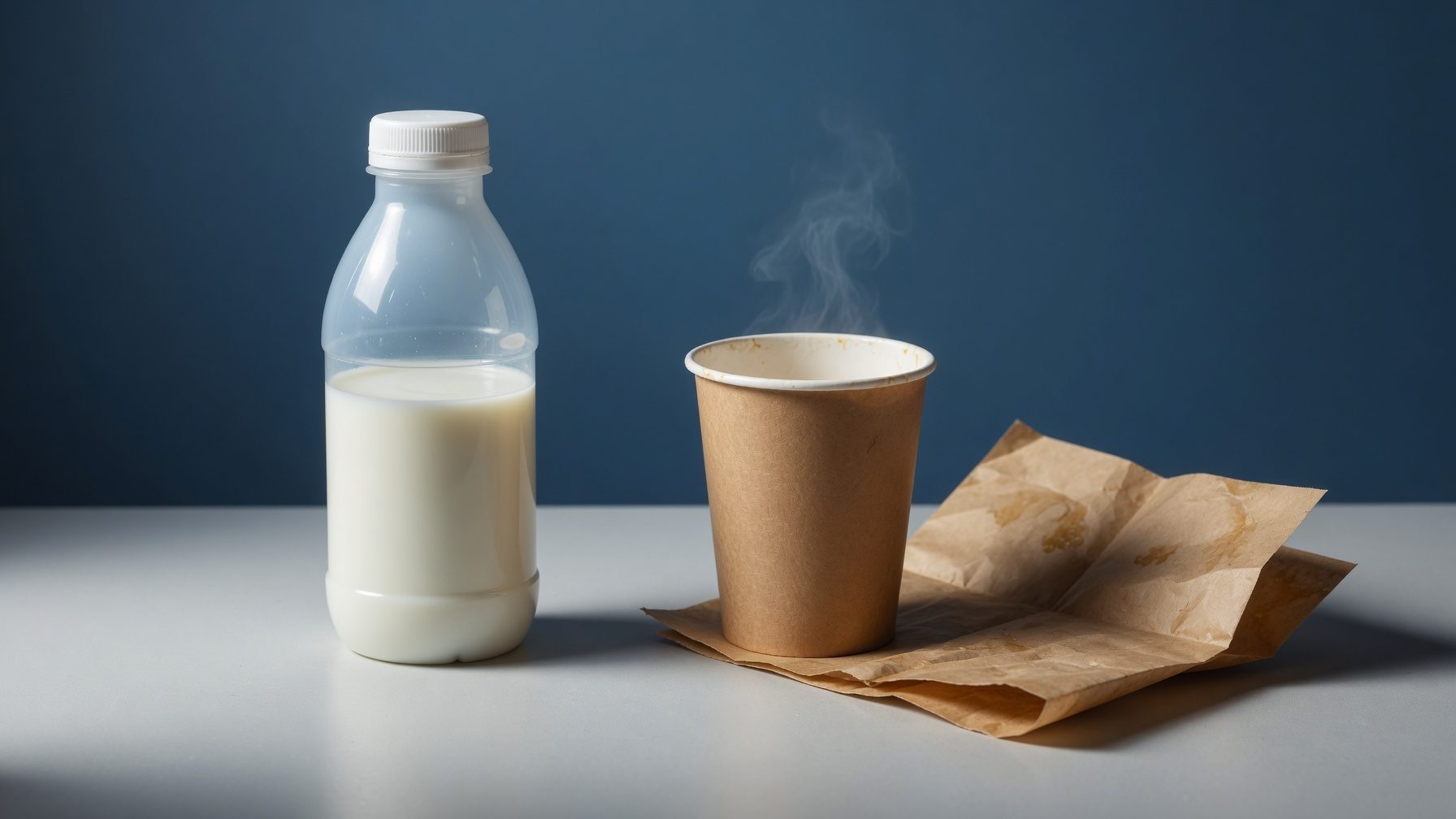
Plastic packaging helps to enhance shelf life. The protect food from humidity and oxygen, they optimize the temperature-humidity balance. Many packagings offer a protective atmosphere. All these effects lead to a longer shelf life. The study of denkstatt GmbH shows on examples how much food waste can be avoided:
| Steak 330 g | in tray with foil, 34% waste | in composite foil, 18% waste |
|---|---|---|
| Cheese Bergbaron | open sale, 5% waste | on plastic tray with foil, 0.14% waste |
| Cucumber 350 g | open sale, 9,4% waste | in PE film, 4.6% waste |
| Bread 400 g | in paper bag with plastic stripe, 11% waste | in oriented PP film, 0.8% waste |
Denkstatt GmbH takes into account the production, the transport, the use-phase and the disposal of the plastic packaging in it’s study.
Let’s have a closer look at the steak: in appropriate packaging, shelf life rises to 16 from 6 days. At the same time, the weight of the packaging is reduced from 31 g to 19 g. Denkstatt Gmbh shows a CO2 saving of 2100 g due to less food waste and of 6 g resulting from the reduced packaging weight.
Another example, the bread. Here, the CO2 savings calculated by Denkstatt GmbH amount to 136 g out of less food waste and of 12 g thanks to a reduced packaging weight.
You may also be aware of the life hack consisting in wrapping the end of the banana with PE film. Doing so, less ethene is evaporated from the banana. Ethene is a gas that makes bananas ripe faster.
Even in cases where packaging weight increases to offer better protection, the CO2 disadvantage is overcompensated by far due to less food waste.
Plastic packaging helps to reduce to CO2 footprint and thus generate a positive effect towards a more sustainable economy and society.
Watch the short video from the Industrievereinigung Kunststoffverpackungen IK (only in German language).
Sources
- [1] Study ”Estimates of European food waste levels” by order of the EU Commission in the course of the EU project FUSIONS
- [2] Study “How Packaging Contributes to Food Waste Prevention”, denkstatt GmbH, Wien