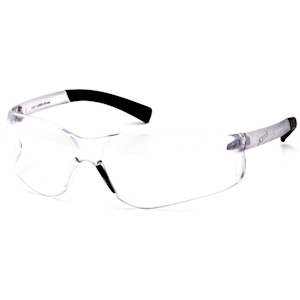
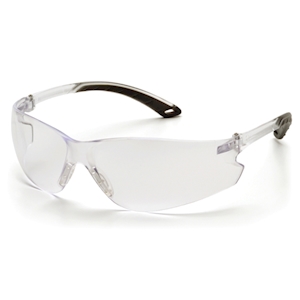
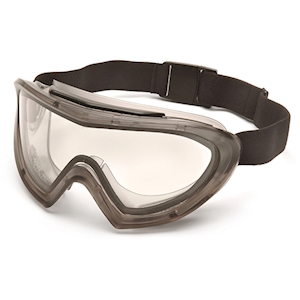
Eye and face protection
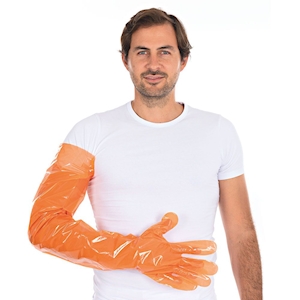
Safety glasses and visors, often in impact-resistant polycarbonate – against mechanical hazards and splashes (selection per EN 166).
In the shopPopular searches
On semadeni.com
Mentioned in the text
Products in the webshop
Application
Personal protective equipment and safety supplies in plastic – eye and face protection, face masks and hearing protection, protective gloves, hygiene articles, safety signage and spill trays: selected by product and application, with the matching standards evidence.

At a glance
Occupational safety bundles all measures that protect employees from workplace hazards – from technical and organisational prevention through to personal protective equipment (PPE). Plastics are a central material here: polycarbonate (PC) delivers impact-resistant, splinter-free eye and face protection; protective gloves in nitrile, latex or PE form the barrier against chemicals, germs and mechanical hazards; face masks to EN 14683, hearing protection, hygiene articles as well as safety signage and spill trays round out the range; particle-filtering half masks (FFP to EN 149) are not part of it. Which equipment is required follows from the risk assessment and is governed by the relevant standards and the European PPE Regulation (EU) 2016/425. Application-specific suitability is decisive: a glove that resists one solvent does not necessarily protect against another. Semadeni stocks protective, hygiene and safety supplies and supplies the corresponding evidence per product and per batch – we do not promise a blanket suitability.
Product worlds
Safety glasses and visors, often in impact-resistant polycarbonate – against mechanical hazards and splashes (selection per EN 166).
In the shop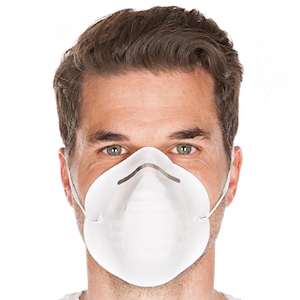
Face masks to EN 14683 and dust masks against coarse dust – without particle-filtering FFP masks.
In the shop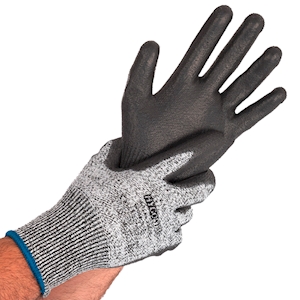
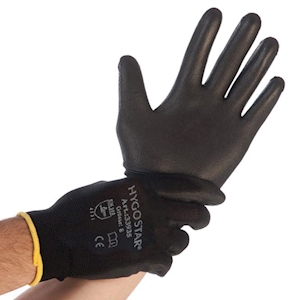
Gloves against chemical (EN 374) or mechanical hazards (EN 388) – the right choice depends on the medium and the task.
In the shop
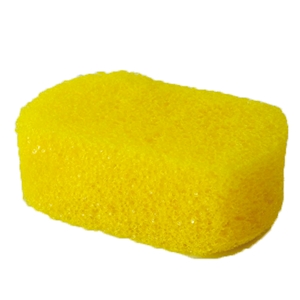
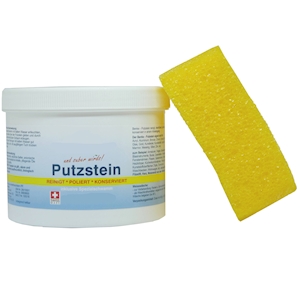
Hygiene, cleaning and protective supplies for industry, laboratory, facility management and healthcare – from a single source.
In the shopAssembly of customer-specific protection and first-aid kits as well as contract packing in Ostermundigen.
View the serviceWhy Semadeni for Occupational safety and personal protective equipment (PPE)
Which PPE protects follows from the workplace risk assessment – not from a blanket protection promise. We assign products to the concrete hazard.
Eye protection per EN 166, face masks per EN 14683, gloves per EN 374 (chemical) or EN 388 (mechanical), all within the PPE Regulation (EU) 2016/425 – evidenced by product and application.
Polycarbonate is impact-resistant and does not splinter – which is why it is a proven material for safety glasses and face protection wherever mechanical hazards or splashes occur.
Protection, hygiene and cleaning belong together: we carry protective articles, hygiene supplies and cleaning products for industry, laboratory and facility management from the same range.
Occupational safety also includes safety signage and spill trays in chemical-resistant plastic – we check resistance by medium and concentration.
Over 8,000 articles from stock, complemented by custom manufacturing from our own Swiss production and contract packing in Ostermundigen – a short path from the protection question to deliverable equipment.
Evidence & compliance
Semadeni AG is certified to ISO 9001, ISO 14001, EN ISO 13485, ISO 22000 and ISO/TS 22002-4 and rated EcoVadis Gold (84/100). Data sheets and declarations of conformity are supplied on request, per product and application rather than as a blanket document.
For your supplier file
Typical set-up
A typical selection scenario: at a workplace with decanting and cleaning tasks, the hazards are first recorded – splash risk to the eyes, skin contact with solvents, aerosols. The PPE follows: safety glasses in polycarbonate (EN 166), gloves resistant to the specific medium (EN 374) plus a face mask to EN 14683 as hygienic protection. Where an aerosol forms that the extraction does not control, particle-filtering respiratory protection to EN 149 is required – we do not supply it. In addition, a spill tray and the correct safety signage secure the area. Which glove resistance actually fits, we clarify based on medium, concentration and task.
In detail
Effective occupational safety begins with the risk assessment of the workplace. Only from this does it follow which personal protective equipment (PPE) and which safety supplies are required. Semadeni supplies protective, hygiene and safety products in plastic – from polycarbonate safety glasses through protective gloves, face masks and hearing protection to spill trays and safety signage. Which products actually protect, we assign to the respective hazard and the relevant standard.
Personal protective equipment is structured by protective function; each area has its own product standards, embedded in the PPE Regulation (EU) 2016/425.
| Area of protection | Typical products | Decisive standard (selection) | Typical material |
|---|---|---|---|
| Eye and face protection | Safety glasses, visor | EN 166 | Polycarbonate (PC) |
| Face masks | Face masks, dust masks | EN 14683 | PP non-woven |
| Hearing protection | Plugs, ear defenders | EN 352 | Foam / plastic |
| Hand protection | Protective gloves | EN 374 (chemical) / EN 388 (mechanical) | Nitrile, latex, PE |
| Hazardous-substance securing | Spill trays, signage | EN ISO 7010 (pictograms) | PE-HD / PP |
This assignment is orientation; for a concrete product, its marking and declaration of conformity are decisive.
PPE is the last stage in the protection concept – after technical and organisational measures. The risk assessment names the risks of a workplace and derives the required equipment from them:
No product offers a blanket protective effect – suitability is to be checked by task and medium.
In industry, laboratory, facility management and healthcare, occupational safety, hygiene and cleaning interlock. We carry protective articles, hygiene and cleaning supplies as well as safety signage from one range – which simplifies procurement and record-keeping. For handling hazardous substances, spill trays in chemical-resistant plastic complement the protection concept; we check their resistance by medium and concentration.
Polycarbonate (PC) is very impact-resistant and does not splinter on impact – it does not break into sharp shards. Precisely for this reason it is a proven material for safety glasses and face shields where mechanical hazards or splashes occur. You will find details on its properties and limits in the polycarbonate material profile.
For the concrete assembly – for example complete first-aid and protection kits, tailored to a workplace or operation – our specialists are on hand to advise. We assign products to the hazard and the relevant standard, assemble customer-specific kits on request and supply the evidence per product and application.
That depends on the risk assessment of your workplace. Often this means eye and face protection (often polycarbonate), face masks, hearing protection and protective gloves, complemented by hygiene articles, safety signage and – when handling hazardous substances – spill trays. Which products actually protect is to be determined by task and medium.
Regulation (EU) 2016/425 governs the requirements for personal protective equipment in Europe and is the basis for CE marking of PPE. It classifies PPE by risk into categories and refers to the relevant product standards (such as EN 166, EN 374, EN 388). For a concrete product, its marking and declaration of conformity are decisive.
Polycarbonate is very impact-resistant and does not splinter on impact – it does not break into sharp shards. These properties make it a proven material for safety glasses and face protection where mechanical hazards or splashes occur. The concrete protective effect of a product depends on its design and testing per EN 166.
The decisive factor is the type of hazard: against chemicals, gloves per EN 374 apply; against mechanical hazards, per EN 388. A glove that resists one solvent does not automatically protect against another – breakthrough time and resistance are to be checked by medium and concentration. We help assign the glove to the concrete task.
Yes. Besides personal protective equipment, occupational safety also comprises organisational and technical measures. These include spill trays in chemical-resistant plastic that retain leaking hazardous substances, as well as safety and warning signage. We check resistance and suitability by medium and application.
Occupational safety and personal protective equipment (PPE) in plastic for businesses, fire services and emergency services: protective gloves, safety goggles, eye wash stations and first-aid material, drip pans as well as machine covers from our own production – from stock and from Swiss supply.
Plastic solutions for industry, mechanical engineering and trade: spill pallets, containers, cut-to-size semi-finished products and special constructions in PP, PE, PVC-U and other technical thermoplastics – custom manufacturing to drawing from batch size one, from Swiss production in Ostermundigen.
Plastic products for building operation, cleaning and caretaking: cleaning and hygiene articles, spray bottles and dispensers, waste and disposal containers as well as covering foils and barrier systems in durable materials such as PP and PE – from stock, with custom manufacturing and Swiss advice.
Personal protective equipment for the laboratory – safety glasses and face shields, disposable gloves, protective suits, overshoes and face masks: selected by hazard, standard and hygiene requirement.
Contract packing, labelling, kitting and packing for articles from our own injection moulding and our trade range – we do not just produce, we finish them to your specification. Semadeni works to ISO 9001 and is certified to ISO 22000; in the packing room we pack articles in food contact under the corresponding hygiene conditions.
Describe the task, the hazard and the environment – we recommend suitable protective, hygiene and safety products, assign them to the relevant standard and assemble complete kits on request. Personal advice from Ostermundigen and Vienna.

The goal is a publishable base without wrong information – not completeness. Anything missing or that could go deeper: report it as "idea for later". We will keep expanding after go-live.
You go through your pages and report what is factually wrong. Expect three to five minutes per page.
Please report: Anything missing, outdated or wrong – and anything visibly broken.
Please don't report: Taste, wording polish, wishes. And that forms do not arrive: that is intentional.