Puncture-proof sharps containers
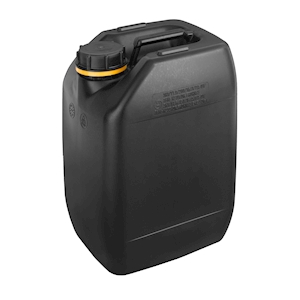
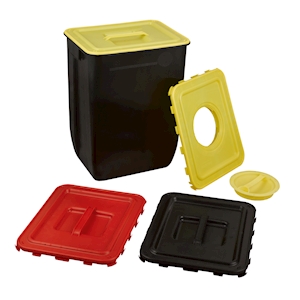
Containers for needles, blades and broken glass – puncture-proof, tightly sealable and designed for clinical waste (UN 3291).
In the shopPopular searches
On semadeni.com
Mentioned in the text
Products in the webshop
Application
Plastic containers for the safe disposal of laboratory waste – puncture-proof sharps containers for sharp and pointed objects, chemical-resistant collection containers and labelable disposal receptacles, selected by use and waste type.
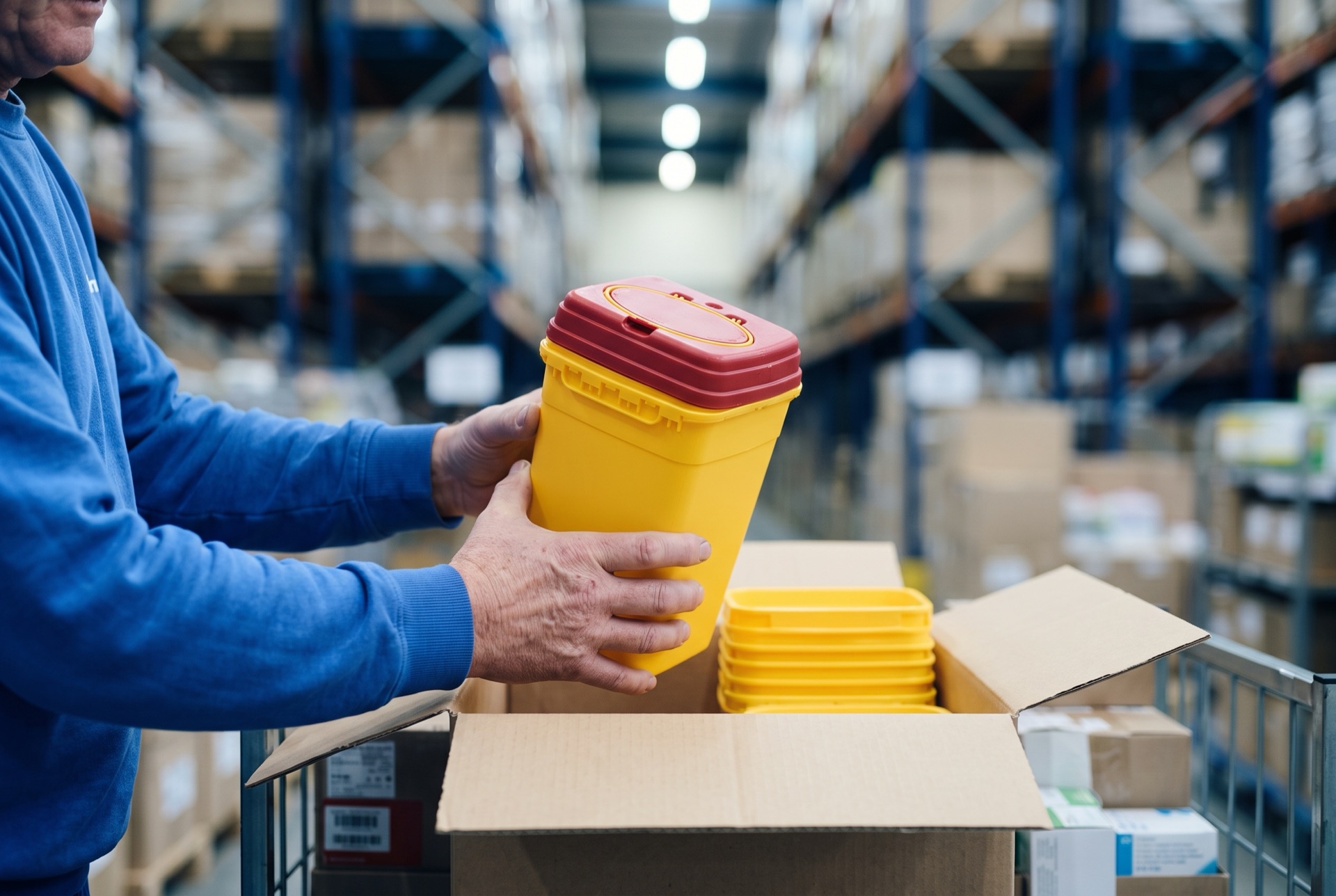
AI-generated
At a glance
Laboratory waste disposal covers collecting, safely sealing, marking and lawfully disposing of solid, liquid, biological and sharp laboratory waste in suitable receptacles. The material determines suitability: polypropylene (PP) and high-density polyethylene (PE-HD) deliver chemical-resistant, impact-tough collection and sharps containers; puncture-proof containers of tough plastic safely receive needles, blades and broken glass. For clinical waste containing sharp or pointed objects, packing instruction UN 3291 applies; liquid chemical waste requires tight, resistant and correctly marked collection containers. Waste type, chemical exposure, volume and the applicable disposal regulation govern the selection. Disposal containers are usually incinerated together with their contents; the single-material nature of the plastic is therefore not a selection criterion here. We verify suitability and conformity by waste type and use – there are no blanket approvals.
Product worlds
Containers for needles, blades and broken glass – puncture-proof, tightly sealable and designed for clinical waste (UN 3291).
In the shop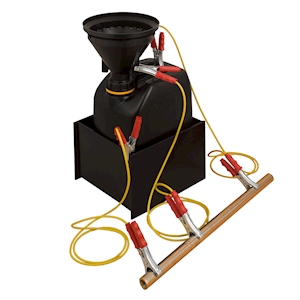
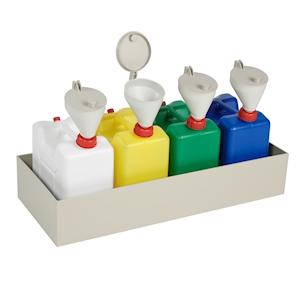
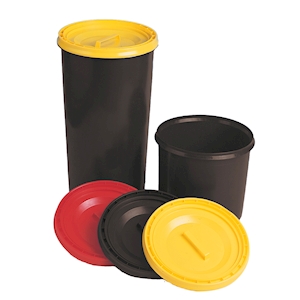
PE-HD containers and jerrycans for liquid and solid chemical waste – resistant, tight and labelable.
In the shop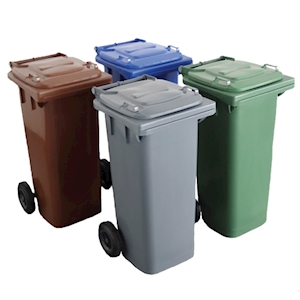
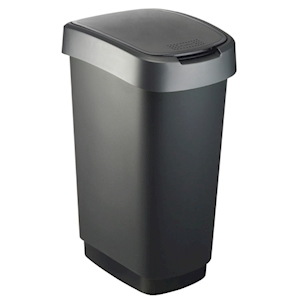
Containers with lids, pedal and swing lids for general laboratory waste – opening without hand contact, easy to clean and labelable.
In the shopWhere a receptacle stays clean and in circulation, reusable systems and recyclate-capable materials are the lever – not the container that is incinerated with its contents.
More on sustainabilityMarking, labelling and assembly of disposal kits in Ostermundigen.
See the processWhy Semadeni for Waste disposal in laboratories and medical facilities
Puncture-proof for sharp objects, chemical-resistant (PE-HD) for chemical waste, tight and labelable for biological waste – the choice follows the waste type, not a blanket principle.
Defined closures secure liquid and solid waste against leakage and odour – important for collection, interim storage and transport to disposal.
Sharps containers of tough plastic safely receive needles, blades and broken glass and protect against needlestick and cut injuries – the basis for clinical waste under UN 3291.
Labelable surfaces, labelling and colour coding support correct waste separation and traceability through to disposal.
Disposal containers are usually incinerated together with their contents. Where a receptacle stays clean and in circulation, we recommend reusable systems and recyclate-capable materials.
Over 8,000 stock items, complemented by special manufacturing from our own Swiss production as well as marking and assembly of disposal kits in Ostermundigen.
Evidence & compliance
Semadeni AG is certified to ISO 9001, ISO 14001, EN ISO 13485, ISO 22000 and ISO/TS 22002-4 and rated EcoVadis Gold (84/100). Data sheets and declarations of conformity are supplied on request, per product and application rather than as a blanket document.
For your supplier file
Typical set-up
A typical selection scenario: at the workstation there is a puncture-proof sharps container for needles and blades (clinical waste under UN 3291), next to it a chemical-resistant PE-HD collection container for liquid chemical waste and a tightly sealable receptacle for biological waste. All containers are marked by colour and label so that separation reliably succeeds. Which containers are needed in the individual case, we clarify based on waste type, volume and the applicable disposal regulation.
In detail
Orderly disposal starts with separation by waste type and the right container – in the laboratory as much as on the ward, in the practice and in the hospital. Semadeni supplies the plastic receptacles for every fraction – puncture-proof sharps containers, chemical-resistant collection containers, disposal and hygiene containers – in PP (polypropylene) and PE-HD. Which container holds follows from the waste type, chemical exposure and applicable regulation.
The choice follows the fraction: sharp waste puncture-proof, chemicals resistant, biological waste tight and marked.
| Waste type | Requirement | Typical material | Reference |
|---|---|---|---|
| Sharp/pointed objects | puncture-proof, tight seal | tough PP / PE-HD | UN 3291 |
| Liquid chemical waste | chemical-resistant, leak-proof | PE-HD | resistance-based |
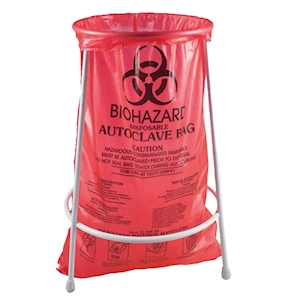
| Biological waste | tight, labelable, easy to clean | PP / PE-HD | use-based |
| General laboratory waste | robust, easy to clean | PP / PE-HD | – |
The assignment is orientation; the pertinent requirement follows from the waste type and regulation and is to be determined by use.
Reliable waste separation stands or falls with unambiguously assigned, marked containers directly at the workstation. Puncture-proof sharps containers protect against needlestick and cut injuries; resistant collection containers safely retain chemical waste.
Unambiguous marking is the basis of correct disposal. Labelable surfaces, labelling and colour coding support separation and traceability through to handover for disposal.
Laboratory disposal containers are usually incinerated together with their contents. What decides suitability here is therefore resistance, a tight seal and unambiguous marking – not the single-material nature of the plastic. Where a receptacle stays clean and in circulation, reusable systems and recyclate-capable materials are the right lever. More on this on our pages about recyclates and reuse.
Depending on the waste type, different requirements apply – the proof is provided by waste type and use:
For special requirements – clinical waste, aggressive chemicals or finished and marked disposal kits – our specialists are on hand to advise and assign container and material to your concrete waste situation and the applicable regulation.
For needles, blades and broken glass, puncture-proof sharps containers of tough plastic are intended. For clinical waste containing such objects, packing instruction UN 3291 applies, which requires, among other things, puncture resistance and a tight seal. The concrete design is to be chosen by waste type and regulation.
High-density polyethylene (PE-HD) and polypropylene (PP) are broadly chemical-resistant and therefore the usual base for collection containers. Decisive, however, is resistance to the concrete chemical and concentration – there is no blanket resistance; we help with the assignment.
UN 3291 designates clinical waste, i.e. (bio)medical waste, that may contain sharp or pointed objects. The associated packing instruction governs requirements such as puncture resistance, tightness and marking. Which classification applies depends on the concrete waste and is to be determined by regulation.
As a rule no: disposal containers are usually incinerated together with their contents, and for contaminated receptacles recovery follows the waste type and the applicable regulations anyway. Single-material plastic can in principle be materially recovered – that route stays open where a receptacle remains clean and in circulation. There we rely on reusable systems and recyclate-capable solutions.
Yes – alongside over 8,000 stock items, we assemble customer-specific disposal kits, for example from a sharps container, collection receptacle, label and lid. We supply the components from stock; marking and assembly we handle in Ostermundigen.
Laboratory consumables, sample vessels and custom parts in plastic for the laboratory, life science and pharma: tubes and racks, liquid handling, filtration, cell culture – chemical-resistant, sterilisable and over 8,000 articles from stock. Swiss development and production in Ostermundigen.
Plastic consumables for hospitals, care homes, medical practices and pharmacies: single-use products, care aids and hygiene articles in hygienic plastics that are sterilisable depending on the material – from stock and with custom manufacturing from Switzerland; for medical devices Semadeni is certified to EN ISO 13485.
Plastic vessels for sampling, sample storage and archiving in the lab – from samplers and sample vessels through tubes to cryo-capable containers, leak-tight, labellable and sterilisable.
UN-approved plastic containers for hazardous goods, acids, alkalis and flammable liquids – compliant with ADR/RID/IMDG, available from stock.
Tell us the waste type, chemical exposure, volume and applicable disposal regulation – we recommend container form, material and closure, verify suitability by use and, on request, finish marked disposal kits. Personal advice from Ostermundigen and Vienna.

The goal is a publishable base without wrong information – not completeness. Anything missing or that could go deeper: report it as "idea for later". We will keep expanding after go-live.
You go through your pages and report what is factually wrong. Expect three to five minutes per page.
Please report: Anything missing, outdated or wrong – and anything visibly broken.
Please don't report: Taste, wording polish, wishes. And that forms do not arrive: that is intentional.