Market & regulation
Bioplastics – the solution for resource problems?
In 2015, 322 million tons of plastic resin have been produced1. It’s base is crude oil. However, depending on the region, only 4-6% of the crude oil goes into plastic production.
This article is archived
This article is archived. It documents the situation at the time of publication and is no longer updated.
Do bioplastics solve the resource problem?
Only in small part. Depending on the region, just 4 to 6 percent of crude oil goes into plastics. Bioplastics ease that share but solve neither the waste question nor the competition for land with food production.
In 2015, 322 million tons of plastic resin have been produced[1]. It’s base is crude oil. However, depending on the region, only 4-6% of the crude oil goes into plastic production.
Crude oil obviously is a limited resource. The worldwide reserves of crude oil amount to 1.492 barrel in 2015 (one barrel equals approximately 159 liters).[2]
The yearly consumption is 90.710 barrels per day in 2016.[3]
Now let’s do the math, and we conclude that we will run out of crude oil in about 40 years from now. However, this is not likely to happen, there are too many unknowns:
- New technologies will possibly lead to detection and exploitation of new oil reservoirs
- Changes in consumer behavior will have an impact on oil consumption (eg. electric mobility)
- How is world total population going to evolve
- Political initiatives to reduce CO2 ,eg. Paris Climate Protocol
However, the plastics industry is exploring options to replace fossil feedstock by renewable feedstock for decades already. An interesting and controversial topic. Let’s have a closer look.
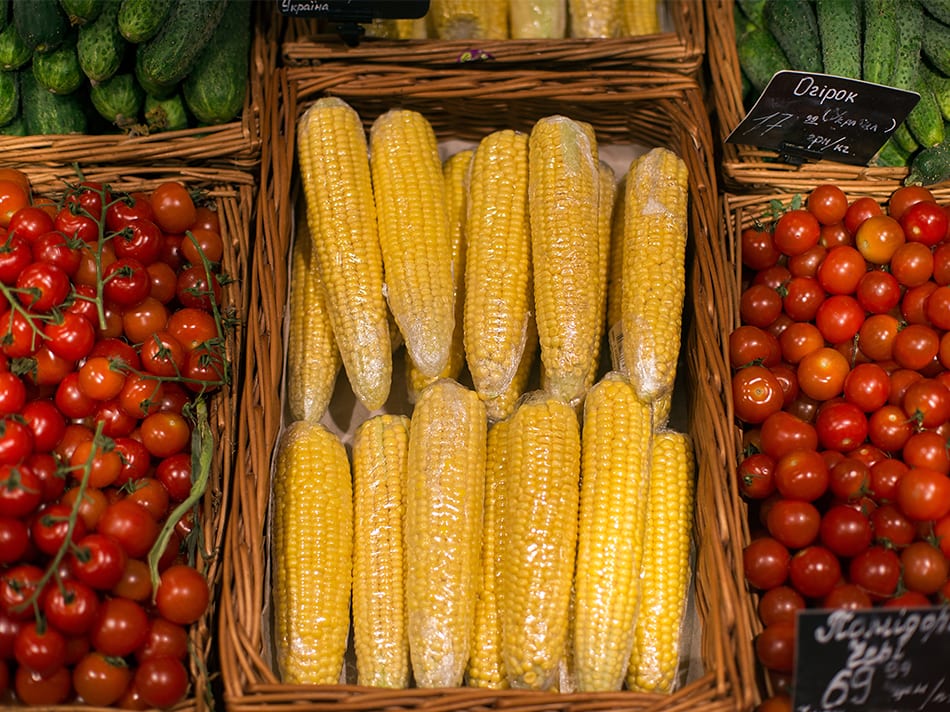
What alternative feedstock is available? This turns out to be the central issue. Basically plants rich in carbohydrates are topping the list. After adequate processing, they allow the synthesis of polymers. Typical plants are corn, sugar cane and potatoes.
Well, perfect then. So we are in a position to replace fossil feedstock? The answer: no.
There are simply not sufficient production capacities. At this time, the worldwide capacities level at 3 million tons per year – just 1% of global total polymer production![4]
Another reason is the necessity to use those carbon hydrate rich plants to feed the planet. Actually, 5 billion hectares are being used for crops. A mere 0.68 million hectares serves the bioplastics production – no more than 0,01% of global croplands[5]. This area allows to cover 1% of global polymer production, thus 68 million hectares would be needed to produce all polymers. This cropland however is competing with human nutrition plantations and with cattle breeding.
Environmentalists also point out the loss of biodiversity when mono-cultures such as large sugar cane plantations are being set up in coastal regions.
Considering the above, the search for alternative feedstock turns towards non-food crops: the use of parts of plant not edible, namely the cellulose which is present in virtually every plant.
Another way to reduce fossil feedstock is represented by the inclusion of renewable components and fibers in the plastics matrix. Well known are the Wood-Plastic-Composites WPC.
The inclusion of waste fractions as filler in a plastic matrix is of particular interest. The resin Starpylene for instance consist of 30% (weight) calcium carbonate that comes from oyster shells – a byproduct of oyster breeding for food purposes.
Another example: Agriplast. This material uses grassland fibers as filler, and enhances mechanical properties at the same time.
Find more information at the following link (only German):
Präsentation “Wertstoffe aus Abfallströmen”, Potsdam, 2013
Bioplastics are no solution to the fossil resource problem at sight. However, they make an important contribution to use less fossil feedstock and will gain importance in the future. This is a call to the industry to optimize fossil based plastics use and to implement recycling initiatives and projects.
Sources
- [1] «Plastics the Facts 2016», Plastics Europe
- [2] OPEC, Annual Statistical Bulletin 2016, Table 3.1: World proven crude oil reserves by country
- [3] iea, International Energy Agency, 2017
- [4] European Bioplastics, biobased Plastics, 2017
- [5] European Bioplastics, Land use for Bioplastics 2014 and 2019, 2017